Skip to content
What Is a Fractional Talent Partner – and Why Are More Founders Using One?
Most founders know what a recruitment agency is. You pay 20-25% of a first-year salary when they place someone. The agency’s incentive is to close the placement as fast as possible and at the highest salary they can negotiate. That’s not me being cynical – it’s just how the model works.
A Fractional Talent Partner is a different thing entirely. I know, because it’s what I am – and the model exists specifically because the traditional agency approach fails founders at the stage where getting hiring right matters most.
Here’s what it actually means, what it costs, and how to know if it’s the right fit for where you are.
What a Fractional Talent Partner Actually Does
A fractional talent partner works inside your business, not from the outside. They operate on a fixed monthly retainer – embedded in your process, building an understanding of your culture and your hiring bar over time, and working exclusively in your interests rather than their own placement targets.
They’re not filling a brief you hand them. They’re helping you build the brief, understand who you actually need, run the sourcing and vetting process, and make better hiring decisions over the medium term.
Think of it as the capability of a senior internal recruiter or Head of Talent, without the full-time salary, the employment overhead, or the equity dilution of making it a permanent role.
How this differs from a recruitment agency
The difference isn’t just in the commercial model – it’s in the incentives. An agency earns when they place someone. That creates pressure to place fast and to place at high salary (because most contingency fees are a percentage of that salary). Neither of those incentives serves you as a founder.
A fractional partner earns whether or not they place anyone that month. Their incentive is to keep earning your business over time – which means making good decisions, not fast ones.
The Financial Logic
On a £65,000 hire, a 25% contingency fee is £16,250. Per placement. With no guarantee that the person stays.
A fractional retainer model typically runs at a flat monthly fee – HFBAC’s Starter Retainer is £1,500/month, the Fractional Talent Partner tier runs from £2,000 to £6,500/month depending on scope and hiring volume. You can run multiple searches simultaneously, and the cost doesn’t change based on who you hire or what their salary is.
The maths shift significantly in your favour once you’re making more than one or two hires a year. The retention data makes it shift even further: companies using embedded talent models see 22% higher candidate retention at 18 months. When replacing a senior hire can cost £60,000-£120,000 in lost productivity alone, that retention premium is the real number.
The question isn’t ‘can I afford a fractional talent partner?’ – it’s ‘can I afford not to have one when I’m making hires that shape my company’s next three years?’
Chemistry First: What This Changes About How You Hire
The reason Chemistry First sits at the centre of the fractional model is that it fundamentally changes what the process is optimising for. Traditional recruitment optimises for speed and salary match. Chemistry First optimises for long-term fit.
That means structuring vetting processes around values alignment, working style, and communication compatibility – not just credentials and experience. It means introducing paid work trials before offers are made. It means taking the time to understand your founding team’s DNA before sourcing anyone.
It’s slower at the front end. It’s significantly less expensive at the back end.
When Is It the Right Time to Bring a Fractional Talent Partner In?
The honest answer: earlier than most founders think. The common pattern is to hire the fractional partner after two or three hires that didn’t quite work. The better pattern is to bring them in before the first critical hire and let them help you build the process from the start.
The specific triggers I’d look for:
- You’re spending more than 15 hours a week on recruitment activity and it’s pulling you away from the work that actually moves your business forward.
- You’ve made a hire that didn’t work and you’re not sure why the process broke down.
- You have three or more roles to fill in the next six months and no systematic way to run those searches.
- You’re about to make a hire that, if it goes wrong, would genuinely cost you significant time and money to recover from.
HFBAC’s Fractional Model: How It Works in Practice
I work with a small number of founders at any one time – intentionally. The model only works if I genuinely understand your business, your culture, and what good looks like for you. That requires real bandwidth, not a high-volume operation.
The engagement starts with a 30-day immersion period: understanding your founding team, your product, your communication style, and your hiring history. That context is what makes everything that follows more accurate.
Services are structured in tiers – Starter Retainer at £1,500/month for early-stage, Fractional Talent Partner from £2,000 to £6,500/month for growing teams – with project-based hiring (£5,500-£15,000 flat fee) available for single critical roles.
Not Sure Which Model Is Right for You?
Start with the Hiring Health Check – it takes 20 minutes and gives you a clear picture of where your hiring process is and what kind of support would actually move the needle.
Book your free Hiring Health Check
Frequently Asked Questions
How does a fractional talent partner differ from a recruitment agency?
An agency earns on placement at 20-25% of salary. A fractional partner works on a fixed monthly retainer, embedded in your business, with no per-placement incentive. Different commercial model, different incentives, different outcomes.
Is a fractional talent partner more expensive than contingency?
For a single hire, possibly. Across three to five hires a year, typically not – and retention data consistently favours the fractional model. The total cost of ownership is lower.
What roles can a fractional talent partner help with?
All of them – technical, commercial, operational, leadership. The value is in the process and the chemistry assessment, not in a specialism in one function.
Is the model suitable for pre-revenue or bootstrapped startups?
Yes – the Starter Retainer tier exists specifically for earlier-stage businesses. The value of getting the process right is arguably higher when you have less runway to recover from mistakes.
What happens if a hire doesn’t work out?
HFBAC operates a 12-month guarantee on placements. If a hire doesn’t work within that period, we work to replace them. The details are in the service agreement.
About the Author
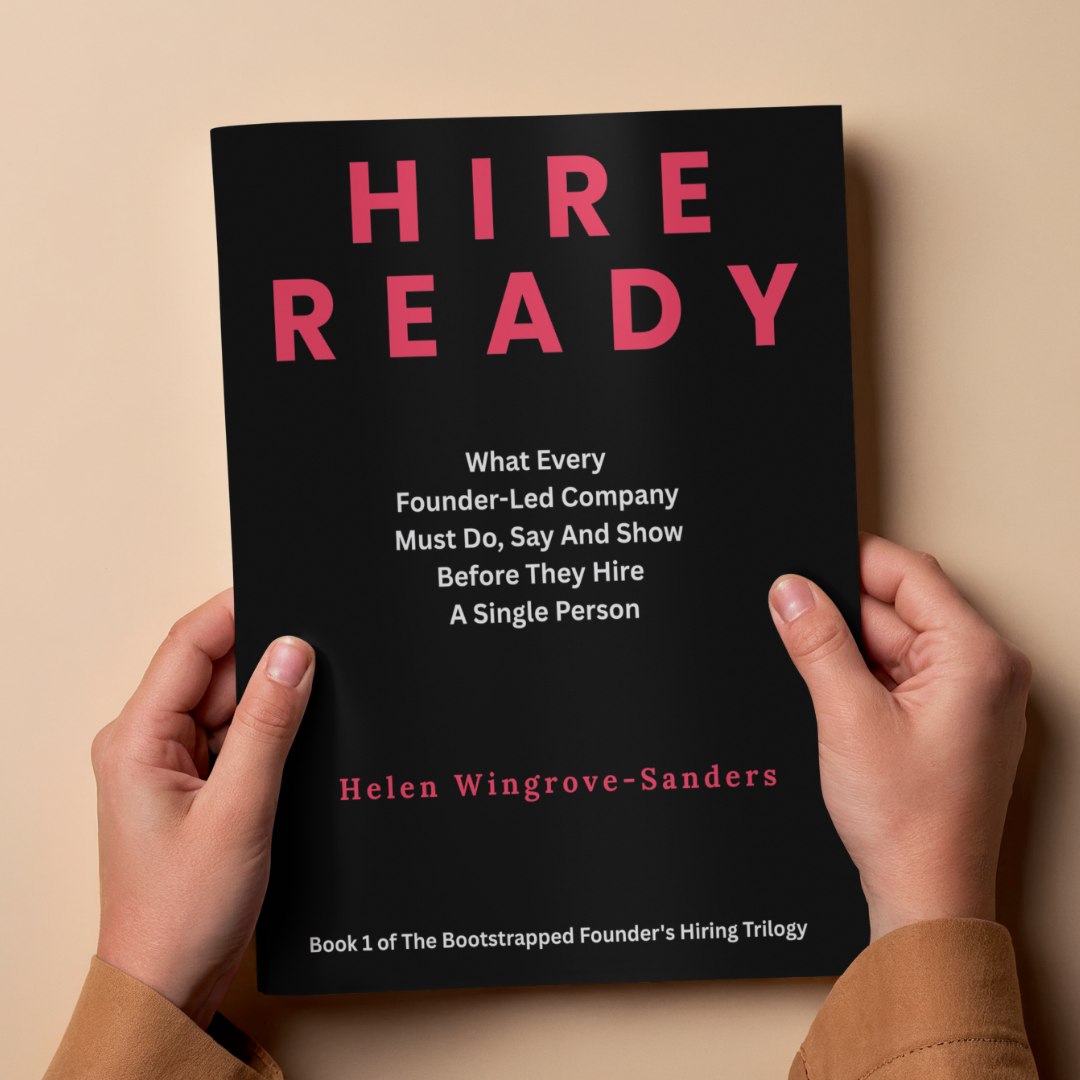
Helen Wingrove-Sanders is the founder of HFBAC (Hiring For and Building Awesome Companies) and the creator of the Chemistry First recruitment methodology. With 27 years of experience placing people into UK and US tech companies, she works exclusively with bootstrapped and founder-led businesses. She began her career at the BBC as the first female football commentator in the organisation’s history. Helen runs hiring workshops with the British Library’s BIPC and Virgin StartUp, and is the author of Hire Ready, Book 1 of The Bootstrapped Founder’s Hiring Trilogy. Based in Bristol, England.
Related: Why Fractional Talent Partners Work for Bootstrapped Founders
You might also like: Read next