Skip to content
Startup Hiring Strategy in 2026: What the Founding Team Playbook Actually Looks Like
The Recruitment and Employment Confederation puts the cost of a single wrong hire at up to 3.5 times their annual salary. That’s not a theoretical number. I’ve seen it play out in real companies, with real founders, who spent months undoing a decision they made in a hurry because they needed someone and a CV looked good.
Here’s what I know after 27 years in recruitment: the founders who hire well aren’t luckier than everyone else. They have a better process. They’ve thought about who they need before they start searching. And they don’t let urgency override judgement.
This is the startup hiring strategy I use with every founder I work with – whether they’re making their first hire or their fifteenth.

Why Standard Recruitment Doesn’t Work for Startups
Corporate hiring processes are built for volume, compliance, and predictability. Those are reasonable priorities if you’re running a 500-person organisation with an HR department and six months of lead time. For a startup making its third hire, that approach doesn’t just fail – it actively makes things worse.
The pace is wrong. The rigidity is wrong. And the metrics are wrong. Volume-based models prioritise filling seats quickly. At founding team level, the cost of a bad fit isn’t just financial – it’s the four months of misaligned work, the team dynamic that never quite gels, the roadmap that drifts because the person leading it didn’t actually believe in it.
That’s why startup hiring needs its own playbook.
The difference between bootstrapped and VC-funded hiring
If you’re bootstrapped, your hiring velocity has to match your cash runway – not your
ambitions. I’d rather you take three months to find the right person for hire number two than make a fast decision that costs you twelve months of compounded problems.
VC-funded startups face a different pressure: the expectation to scale fast. That’s where the 23% failure rate from premature scaling comes from. Hiring quickly because capital is available is not the same as hiring strategically. The playbook applies in both contexts – the tempo just changes.
The Chemistry First Methodology Applied to Founding Teams
Chemistry First is the methodology I’ve built my entire practice around. The principle is simple: technical skill is the entry requirement, not the differentiator. What determines whether a hire works – at founding team level especially – is everything else.
Do they share your risk tolerance? Do they communicate in a way that works with the way you work? Do they see the company’s mission as something they’re genuinely building, or as a job they happen to have at a startup?
65% of high-growth startups that fail cite interpersonal conflict at leadership
level as a primary cause. Chemistry First exists to address that directly.
How to build your founding team DNA before you hire
Before you post a role, write down three things: the culture you’re trying to build, the working style that already exists in the room, and the one thing a new hire must never be. Those three things are your filter. They’re not part of the job spec – they’re more important than the job spec.
Every initial hire should raise the collective average of the team. That means being honest about what the team currently lacks – not just in skills, but in thinking style and perspective.
Where to Find the Right People: The Sourcing Tier List
Not all sourcing channels are equal, and spending time on the wrong ones is one of the most expensive mistakes a founder can make. Here’s how I’d structure it:
- S-Tier: Direct sourcing from first-degree connections and trusted advisors. Historical data consistently shows these hires have the highest success rates in early-stage environments. You already have a baseline of trust.
- A-Tier: Referrals from people whose judgement you trust. Pre-vetted by someone who understands your culture – they’ve already done some of the chemistry filtering for you.
- B-Tier: Niche hiring platforms and technical communities built for the startup ecosystem. More refined talent pool than general alternatives.
- C-Tier: High-volume contingency agencies and general job boards. Useful for very specific, junior roles. Not where you find your founding team.
The best candidates at senior level are rarely actively job searching. They’re building, contributing, and visible in their communities. Your job is to be visible in those same places – and to reach out in a way that’s worth their time.
Outreach that actually works
Lead with the problem you’re solving and the scale of the opportunity. Be transparent about your stage – whether that’s a validated idea, an MVP, or early revenue. People who are serious about the role will respect your honesty more than vague claims about ‘exciting opportunities’.
By 2026, candidates at senior level are looking for founders they believe in as much as companies they want to work for. Your personal clarity about where you’re going is itself a talent magnet.
Building Your Hiring Roadmap
A hiring roadmap is simply an honest plan that connects your people decisions to your business milestones. It doesn’t need to be complicated. It needs to answer three questions: who do you need, when do you need them, and how long does it realistically take to find them?
- If your roadmap includes a specific technical milestone in Q3, your hire needs to be onboarded by Q2 at the latest. Most senior technical hires take 8-12 weeks from starting the search to first day.
- If you’re planning to hit a revenue target that requires a sales leader, that hire needs to be in place 90-120 days before the revenue target date – not when you hit the wall.
- Define whether each vacancy needs a co-founder-level commitment or an employee-level one. These are different conversations with different candidates.
What to budget for
Top-tier talent in 2026 expects a base salary at the 75th percentile of market rate, plus equity that reflects their risk in joining early. Typical early-stage technical leads carry equity pools of 0.5-2.0% depending on stage and seniority. Factor this in before you start conversations – nothing kills a hire faster than an equity offer that feels like an afterthought.
Why Fractional Talent Partnership Changes the Model
A Fractional Talent Partner operates as an embedded extension of your business rather than an external supplier. They’re not incentivised to fill seats quickly or push salaries up to earn a bigger fee. They’re aligned with your long-term outcomes.
The flat monthly retainer model replaces unpredictable contingency fees with a predictable cost you can plan around. It also means the person doing the work understands your culture, your communication style, and what ‘right’ looks like for your specific context – something a generalist agency simply cannot replicate.
68% of Series A startups have moved to embedded recruitment models. The data on why is consistent: better retention outcomes, better cultural alignment, and lower total cost of hire over 12 months.
Ready to Build Your Hiring Roadmap?
The Hiring Health Check takes 20 minutes and gives you a clear picture of where your hiring process is strong and where the risk is. It’s the right place to start before any significant hire.
Book your free Hiring Health Check
Frequently Asked Questions
What’s the most effective startup hiring strategy for 2026?
A hybrid approach that combines Chemistry First vetting with fractional talent support. Prioritise sourcing through trusted networks over high-volume channels. Set your hiring roadmap against specific business milestones, not headcount targets.
How much should a startup spend on recruitment in early stages?
For key founding hires, budget for a process that’s thorough rather than fast. Flat-fee recruitment typically runs between £5,500 and £15,000 per role depending on seniority and complexity. That’s significantly less than the 3.5x salary cost of getting it wrong.
What’s the difference between a recruitment agency and a fractional talent partner?
An agency works on contingency – they earn when they place someone, at 20-25% of first-year salary. A fractional talent partner works on a flat retainer, embedded in your business, with no financial incentive to push salary or speed over fit.
When is the right time to hire my first full-time employee?
When the founding team is spending more than 20 hours per week on work that a hire could own – and when you have at least 18 months of runway to sustain the payroll commitment.
How do I assess chemistry in a remote interview?
A paid working trial is the most reliable method – 4-6 hours of real collaborative work. Not a test, not a formal exercise. Actual work that reveals communication style, how they respond to feedback, and whether the dynamic feels right.
What are the legal requirements for hiring in the UK?
Right to Work checks via the Home Office digital service before the start date. Written statement of employment particulars by day one. Breaches carry civil penalties. If you’re unsure, get specialist HR or employment law advice before making an offer.
About the Author
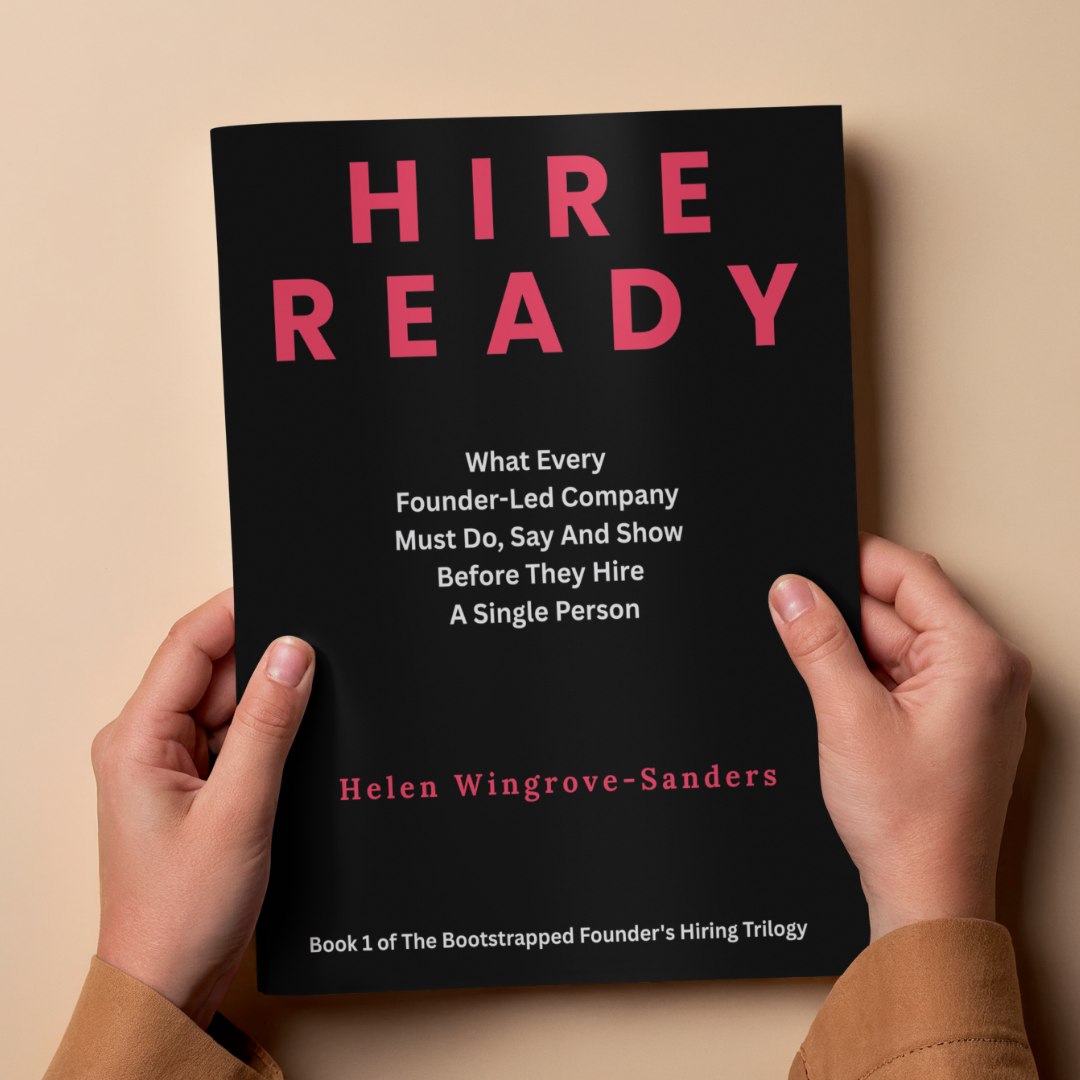
Helen Wingrove-Sanders is the founder of HFBAC (Hiring For and Building Awesome Companies) and the creator of the Chemistry First recruitment methodology. With 27 years of experience placing people into UK and US tech companies, she works exclusively with bootstrapped and founder-led businesses. She began her career at the BBC as the first female football commentator in the organisation’s history. Helen runs hiring workshops with the British Library’s BIPC and Virgin StartUp, and is the author of Hire Ready, Book 1 of The Bootstrapped Founder’s Hiring Trilogy. Based in Bristol, England
Related: The Startup Interview Process: What It Should Actually Look Like
You might also like: Read next